”Eurovilla” Dubrovnik
LocationDubrovnik
InvestorEurovilla
Year2025.
Area40 m²
StatusCompleted
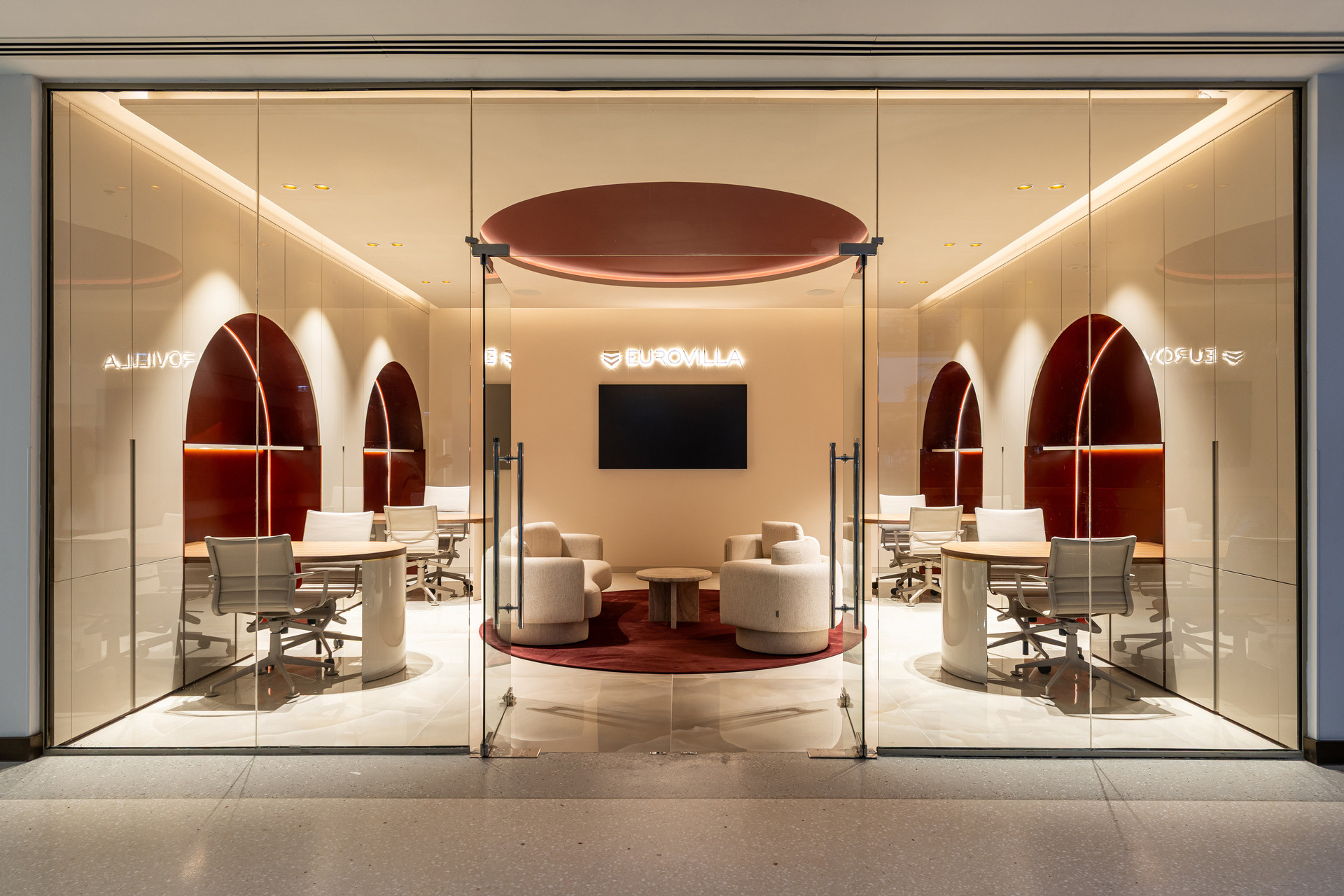
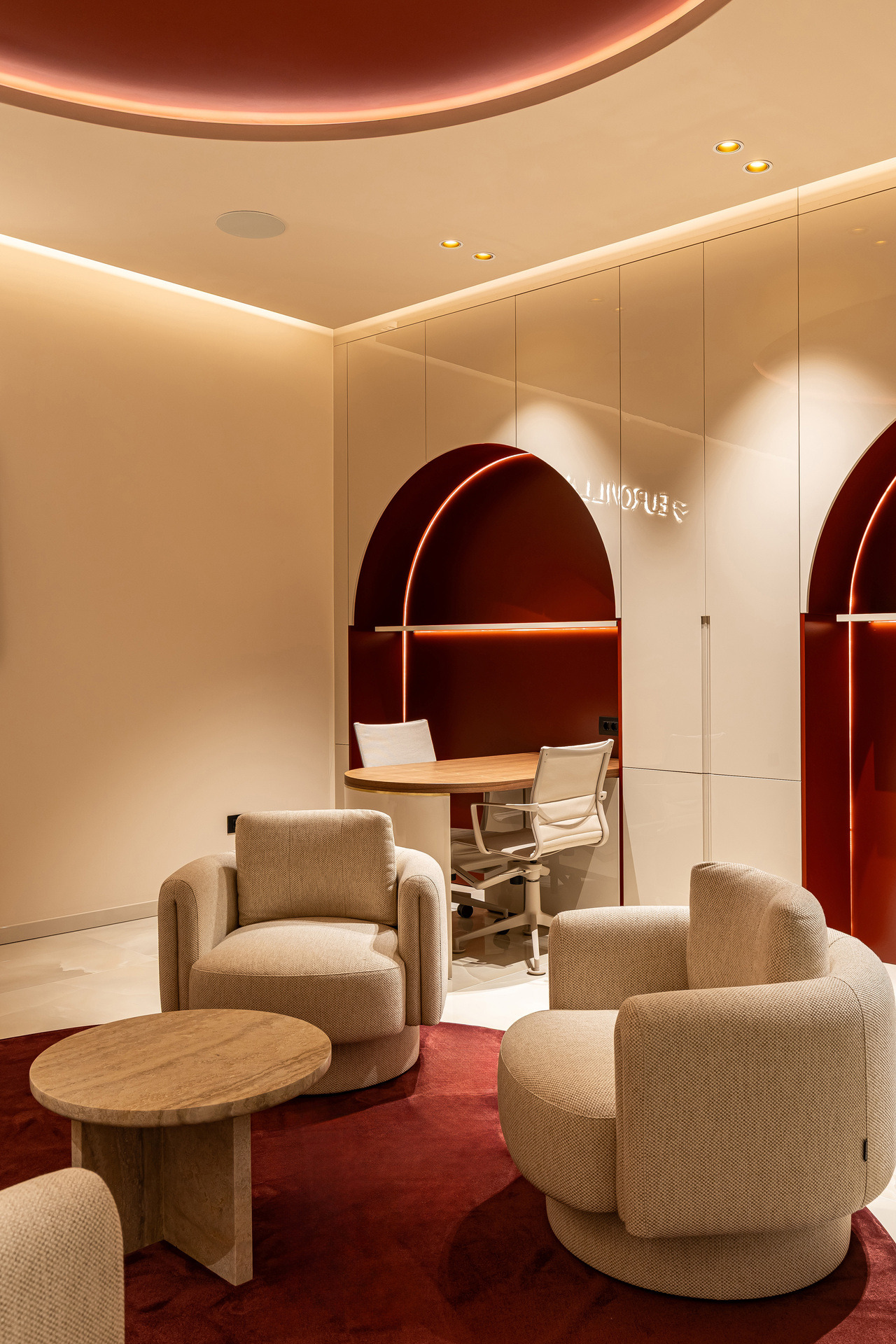
Inspiration for the interior design project of the business space was found in the motif of the saloča, the central room of a Dubrovnik summer residence. Within the residence, the saloča was usually located on the second floor in order to retain daylight for as long as possible, and from it one would typically enter two or more adjoining side rooms.
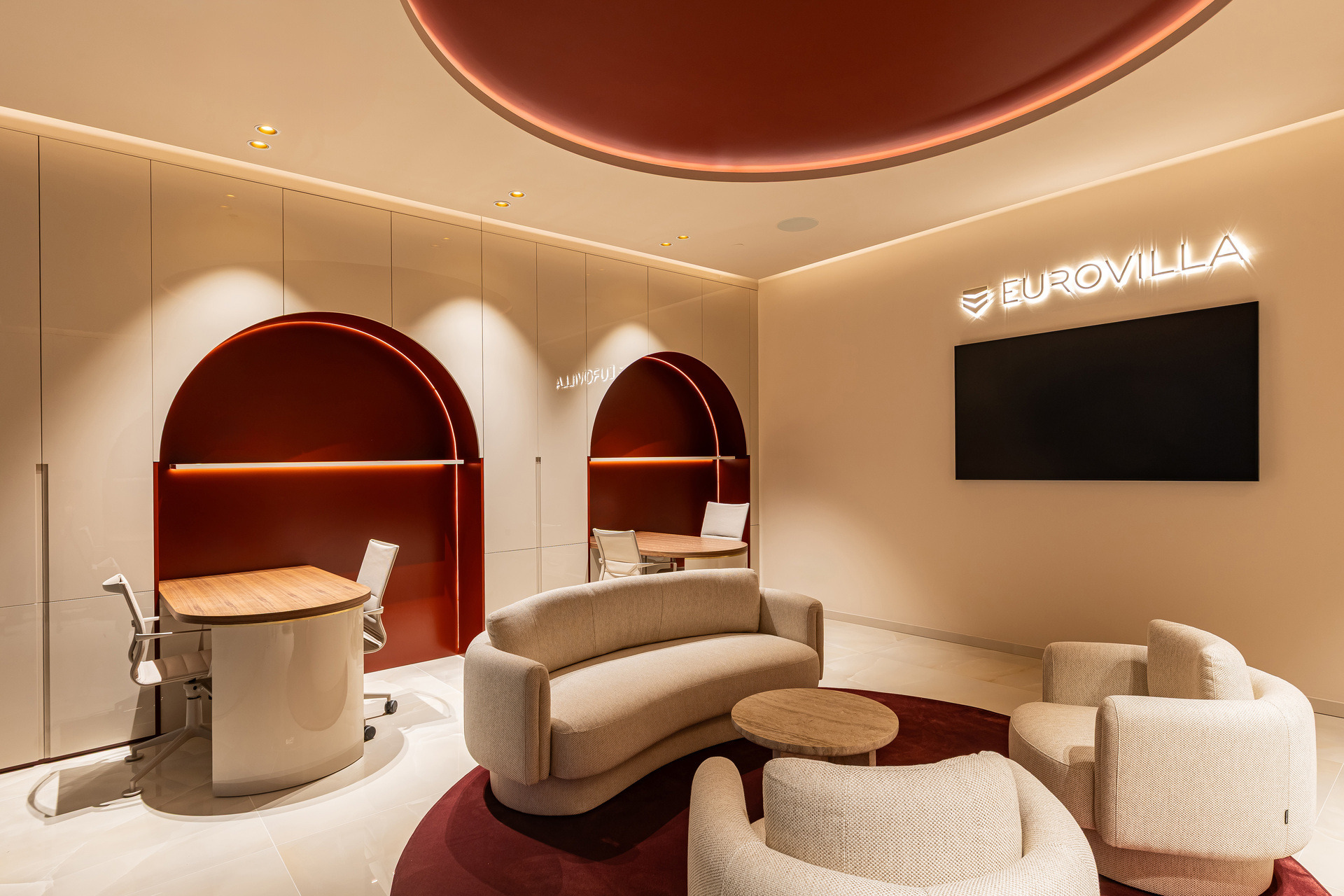
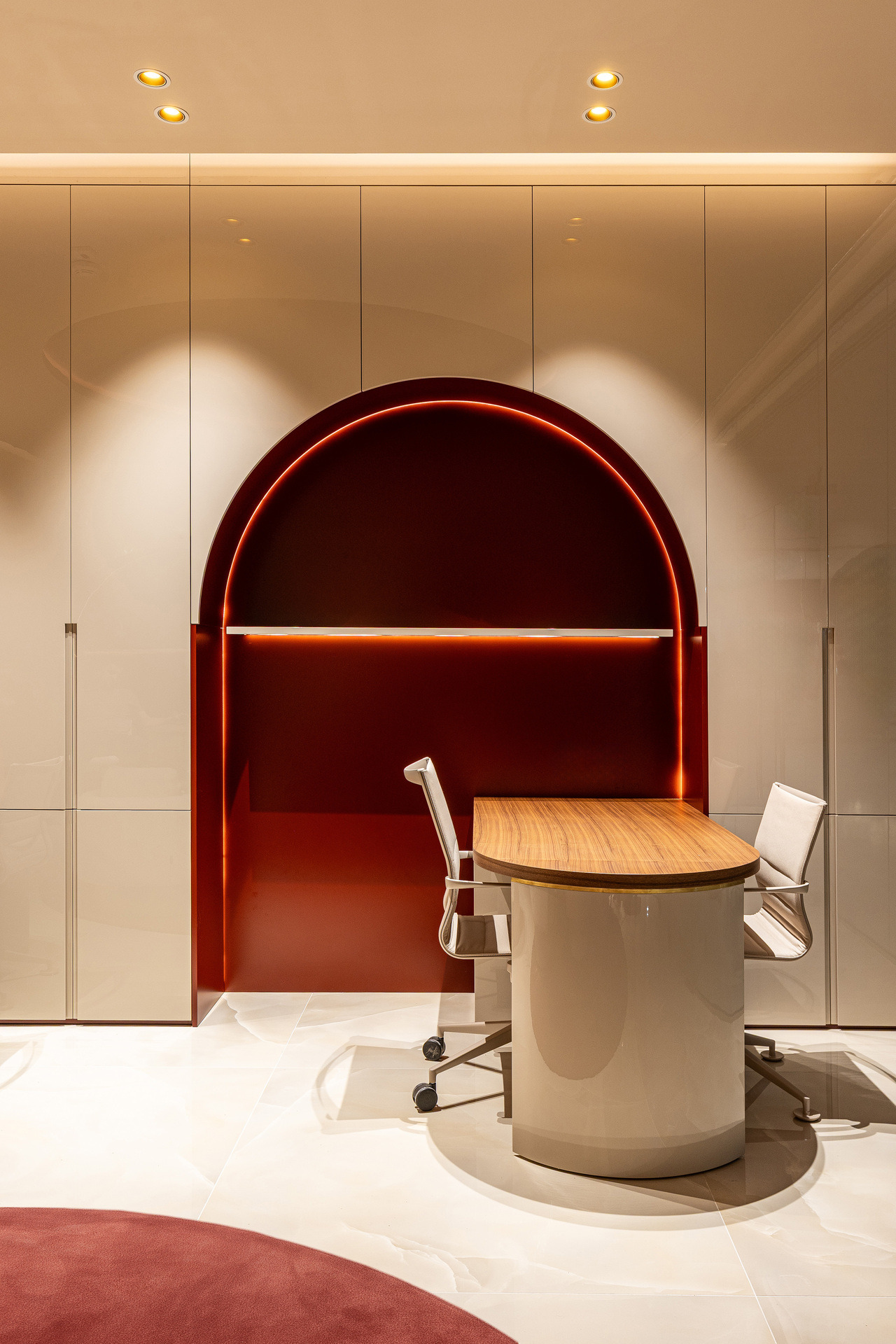
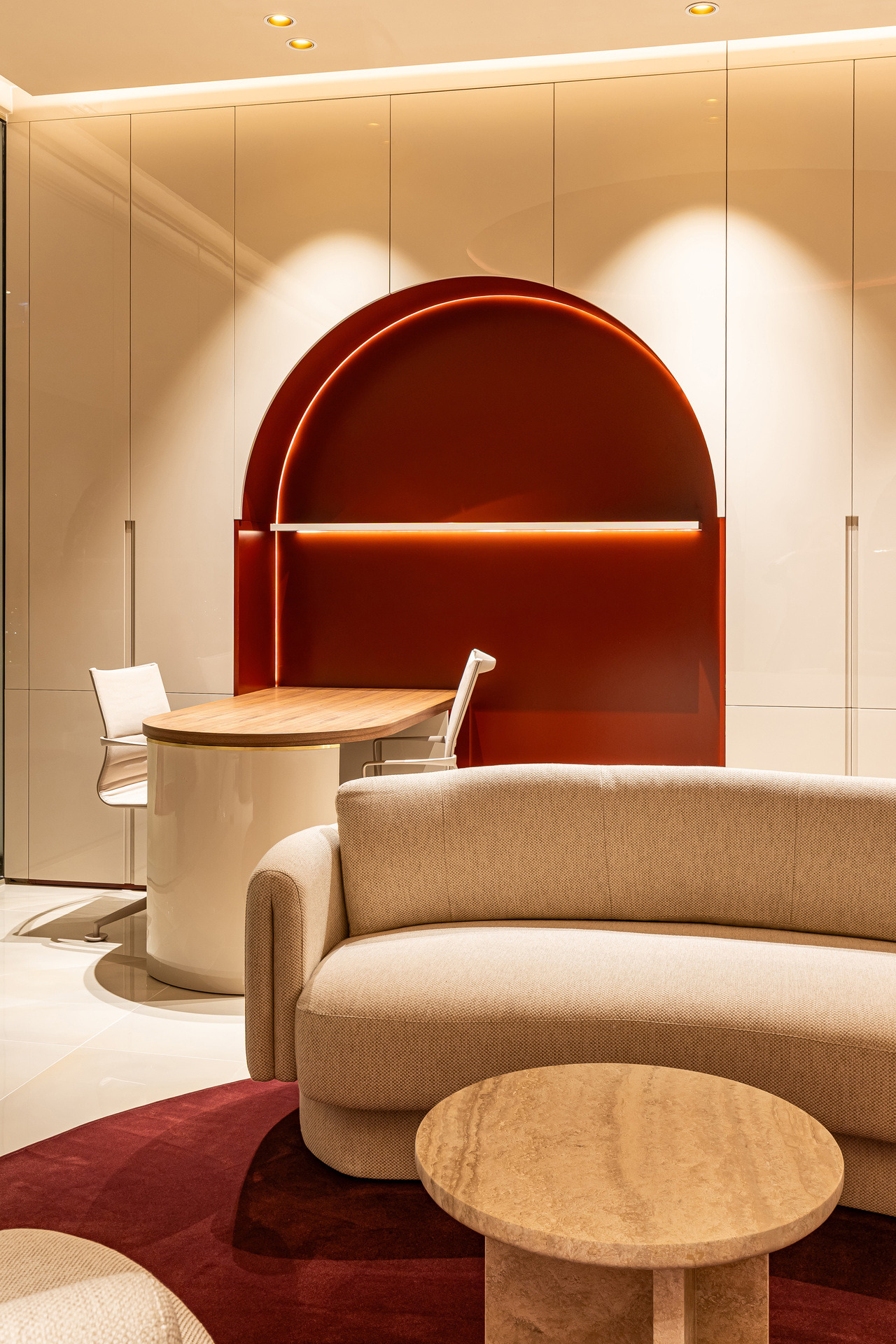
The interior design project envisages the establishment of a central living area, conceived as a modern interpretation of the saloča. Within this living area, a workspace is positioned, along with a designated area for receiving clients. The side walls are intended for the storage of work materials, wardrobes, and other equipment, and in essence represent an interpretation of the side rooms of the saloča.
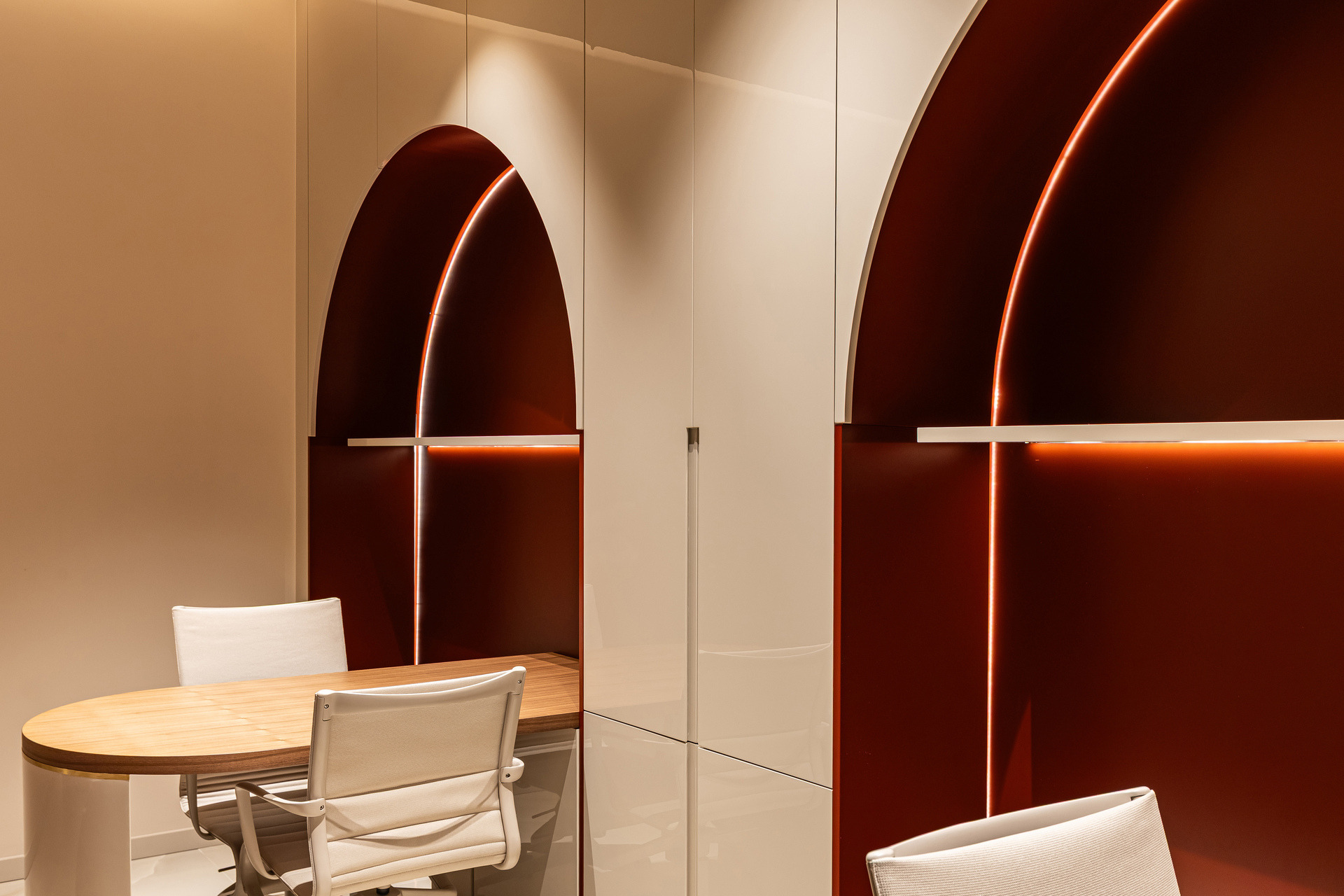
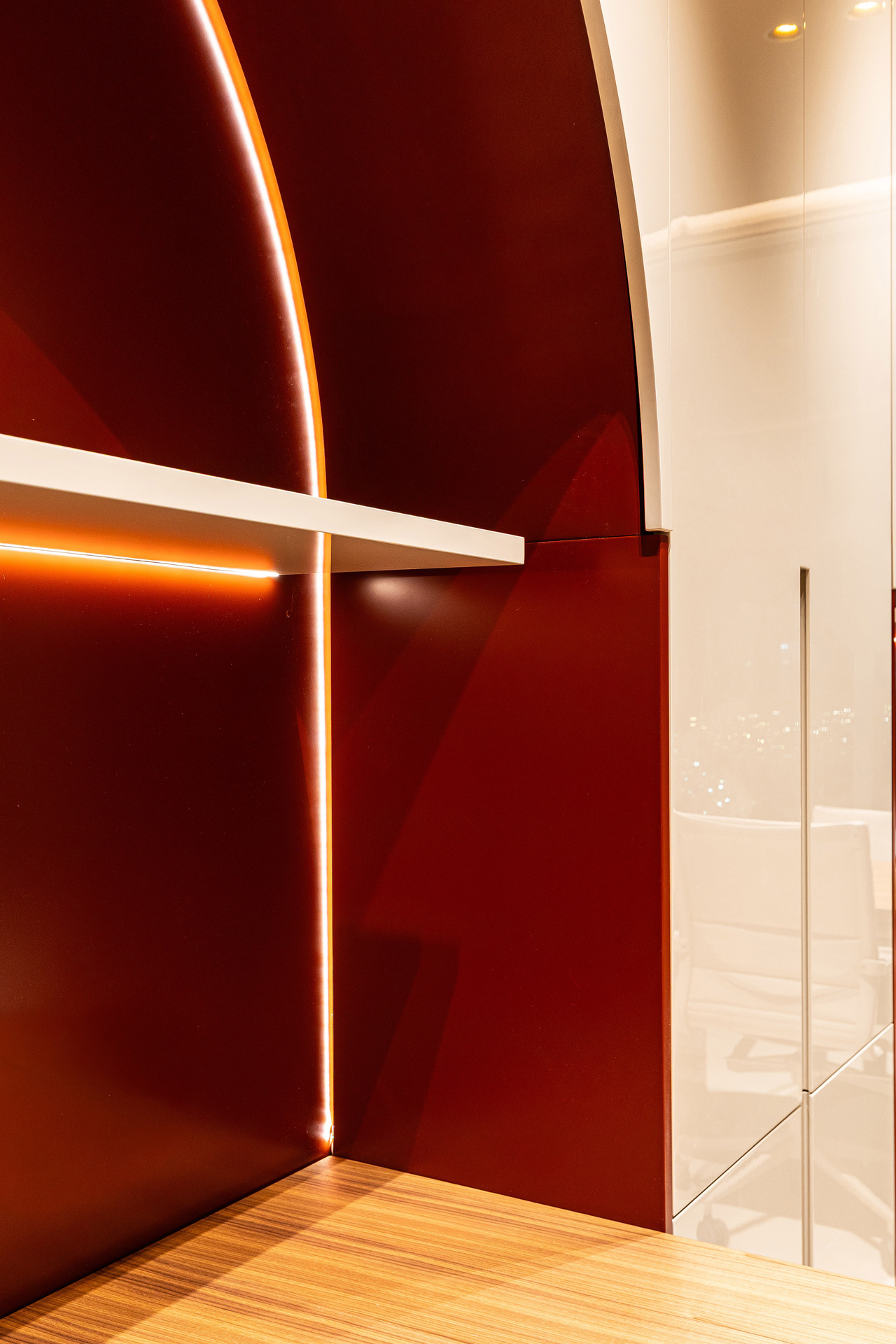
As additional inspiration for shaping the side walls of the business space — and of the saloča — the Dubrovnik architectural motif known as the “na koljeno” (a bent or angled wall opening that widens the interior space) was adopted. Beyond its interpretation as a traditional element associated with trade, this motif functionally contributes to increasing the width of the working area. The remaining portions of the side walls are designed as solid, enclosed elements within which storage for work materials is planned. Through this design approach, the central area is completely freed, thereby realizing the idea of a central living space — that is, the saloča.
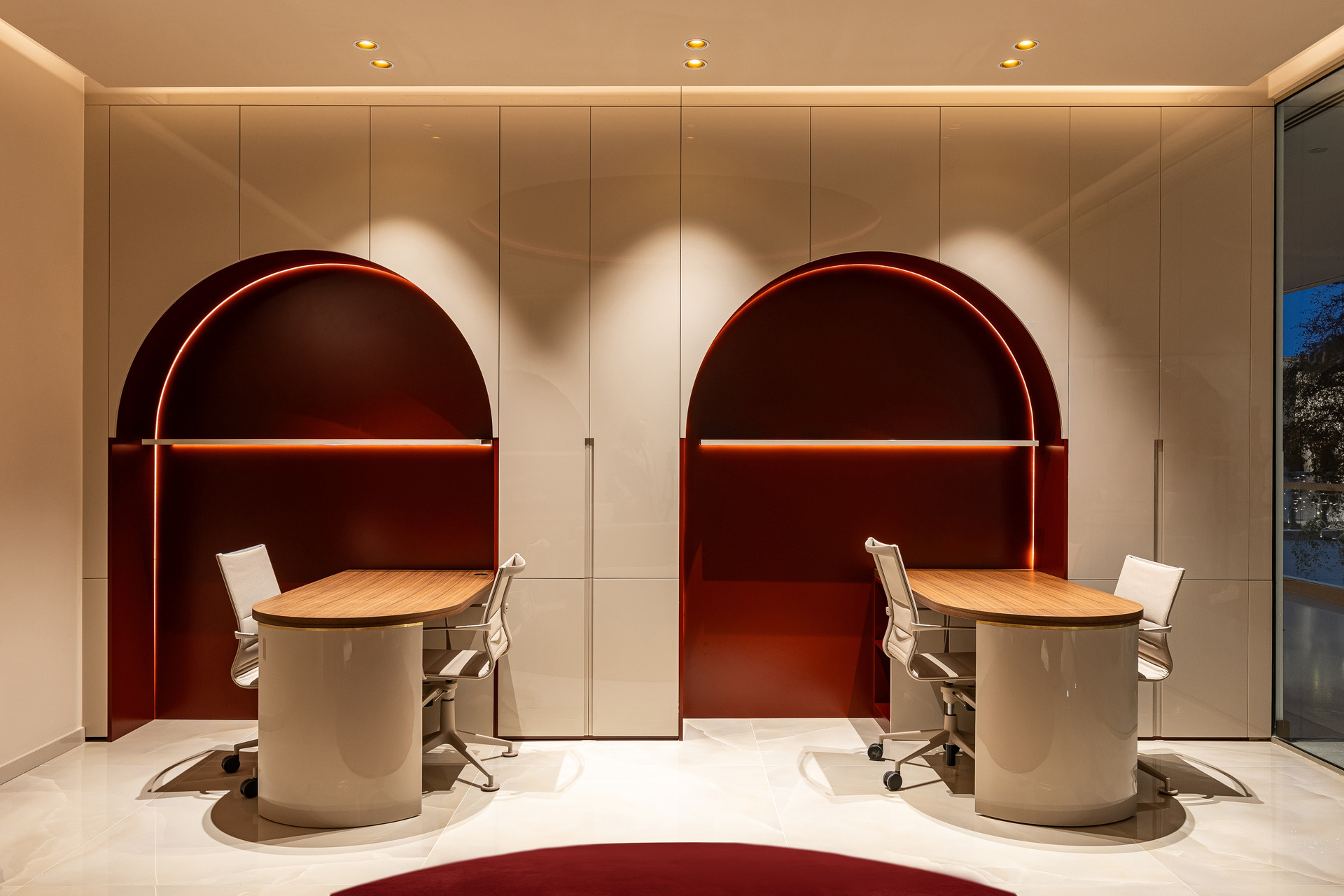
In addition to the motif of the saloča, the concept of Dubrovnik diplomacy was also emphasized in the design process. Dubrovnik diplomacy represents a historical phenomenon that distinguished Dubrovnik from the rest of Europe. The ceremonial attire of envoys from the time of the Republic of Dubrovnik was characterized by a red color scheme, whose vivid tone can be associated with the agency’s logo. Given that Eurovilla is only now entering the Dubrovnik market, by drawing inspiration from these motifs, the interior design of the space is interpreted through Dubrovnik tradition, architectural elements, and diplomacy.